

In today’s hyper-competitive B2B (business-to-business) landscape, guessing your way through digital marketing is no longer an option. Whether you’re a startup aiming to break into the market or an established company looking to scale, understanding what your competitors are doing—and how well they’re doing it—can give you a serious edge.
Competitive analysis helps you uncover your competitors’ strengths, weaknesses, marketing strategies, and hidden opportunities. From website SEO to paid ads and lead generation funnels, it provides a roadmap to outperform the competition and sharpen your digital strategy.
Identify Your Top Competitors

Before you can analyse your competitors, you must know who they are. The first step in any B2B digital marketing competitive analysis is to identify the companies targeting the same audience, offering similar products or services, and competing for the same digital space.
How to Find Your Competitors:
- Google Search: Search for your primary keywords or services and see which companies appear in the top results. These are often your strongest digital competitors.
- LinkedIn: Use the search bar or filters to find companies in your industry. Pay close attention to those with similar company sizes, target markets, or customer segments.
- Industry Directories: Explore platforms like Clutch.co, G2, or niche-specific directories to discover other B2B companies in your space.
- Tools like SimilarWeb, Ahrefs, or SEMrush: These tools can help you uncover websites with overlapping traffic, similar keyword rankings, or paid ad visibility.
Think Local and Global:
Even if your business focuses on a specific region, it’s smart to analyse local and international competitors, especially if your services are digital or scalable. Global companies might target your audience with paid ads or organic content even if they don’t have a physical presence in your market.
Action Step:
Create a spreadsheet or list that includes:
- Company Name
- Website URL
- Industry/Niche
- Notes (e.g., “Strong content strategy,” “Heavy on paid search,” “Focused on enterprise clients”)
Gather Basic Information

Once you’ve identified your top competitors, it’s time to dig deeper. Understanding the foundation of each competitor’s business will help you interpret their digital strategies with context. This step sets the stage for more technical analysis by giving you a clear picture of who they are, what they offer, and who they’re targeting.
Key Details to Collect for Each Competitor:
- Company Name & Website
Start with the basics—note the official name and URL to track them across platforms. - Industry and Products/Services
Understand their niche: Are they in SaaS, consulting, or manufacturing? What specific services or products do they offer? This will help you identify overlaps and differentiators. - Target Market
Who are they selling to?- Small and medium-sized businesses (SMBs)?
- Large enterprises?
- A specific B2B vertical like healthcare, finance, or logistics?
Define whether they focus on a broad or niche B2B audience.
- Unique Selling Proposition (USP)
What makes them stand out? Is it price, innovation, speed, customer support, or specialisation?
Look at homepage headlines, product pages, or About Us sections to uncover how they position themselves in the market.
Pro Tip:
To gather this information efficiently, use tools like LinkedIn Company Pages, Crunchbase, and their official websites. You can also extract valuable insights by reviewing their marketing copy, testimonials, and client logos.
Analyze Their Website and Content

Your competitor’s website is often the first impression they make on potential clients, and it can tell you a lot about their digital strategy. In the B2B space, where trust and credibility are key, a strong website often reflects how seriously a company invests in customer experience and lead generation.
What to Look For:
Website Design & User Experience (UX)
- Is the design modern, clean, and professional?
- Is it easy to navigate?
- Does the website load quickly and work well on mobile devices?
Content Strategy
Explore their core content types:
- Blog: Do they publish regularly? What topics are they covering?
- Case Studies/Testimonials: Are they using social proof to build credibility?
- Whitepapers, eBooks, and Webinars often signal a mature content marketing strategy, especially in B2B.
- Videos or Product Demos: These focus on education and visual engagement.
Calls-to-Action (CTAs) and Conversion Paths
- Are CTAs clear and strategically placed?
- Is there a logical flow from landing pages to forms or demos?
- Are they offering free trials, audits, or consultations?
Lead Magnets
- What kind of lead capture forms do they use?
- Are there gated assets like PDF downloads, newsletter opt-ins, or webinars?
Technical Aspects
Use tools like Google PageSpeed Insights, GTmetrix, or BuiltWith to analyse:
- Page load times
- Hosting platforms
- CMS (like WordPress, HubSpot, Webflow)
- Marketing and tracking tools
Audit Their SEO Performance

In B2B digital marketing, organic visibility is a long-term growth engine. Auditing your competitors’ SEO performance gives insight into how they attract traffic, which keywords they dominate, and where your brand can outrank them.
Using SEO tools like Ahrefs, SEMrush, Moz, Ubersuggest, Optimizo, you can gather a comprehensive snapshot of their search engine strategy—and use it to improve your own.
What to Analyse:
Domain Authority (DA)
This metric (or Domain Rating in Ahrefs) indicates the overall authority and backlink strength of a website.
- Higher DA = greater trust and ranking potential.
- Compare your domain’s score with each competitor.
Top Organic Keywords
- What keywords are they ranking for?
- Are these high-volume, high-intent, or niche terms?
- Which ones are relevant to your business that you’re not ranking for?
Backlinks and Referring Domains

- Where are they getting their backlinks from?
- Are they earning links through PR, guest posts, directories, or content partnerships?
- Identify backlink gaps between your site and theirs.
Content Gaps
- Use content gap tools in SEMrush or Ahrefs to discover:
- Keywords your competitors rank for that you don’t.
- Missed opportunities in your blog or service page content.
Top-Ranking Pages
- Which pages drive the most traffic to their site?
- Study how those pages are structured, titled, and optimised.
- Look at how they interlink content and use CTAs on top pages.
Structured Data / Schema Usage
- Are they using rich snippets (FAQ, reviews, product schema)?
- Tools like Google Rich Results Test or Merkle’s Schema Markup Tool can help analyse their markup.
Examine Paid Advertising Strategy

While SEO builds long-term visibility, paid advertising allows B2B companies to capture attention fast, especially in highly competitive niches. Analysing your competitors’ PPC (Pay-Per-Click) strategies can reveal what they’re spending money on, how they position their products, and which keywords or offers drive conversions.
How to Research Competitor Ad Strategies:
Use tools like SpyFu, SEMrush, or Google Ads Transparency Centre to uncover:
Whether They’re Running PPC Ads
- Check if your competitors are actively bidding on branded or non-branded keywords.
- Are they advertising on Google Search, Display, YouTube, or LinkedIn Ads?
Target Keywords and Ad Copy
- What keywords are they bidding on?
- Are they targeting bottom-of-funnel intent keywords (e.g., “best CRM for healthcare”)?
- Analyse the headlines, descriptions, and CTAs they use in their ads.
Landing Pages Used for Ads
- Where do their ads lead?
- Are they using optimised landing pages or just sending traffic to home/service pages?
- Look at design, form layout, offer (e.g., free demo, whitepaper), and messaging.
Estimated Budget and Bidding Strategy
- SpyFu and SEMrush often provide estimated monthly ad spend.
- Check how aggressively they’re bidding and how consistent their ad activity is.
Pro Tip:
Use Google Ads Transparency Centre (https://ads.google.com/transparency) to view live and historical ads for any business that runs Google Ads. Enter the competitor’s name or domain to see their creatives and ad placements.
Check Social Media Presence

Social media may seem more consumer-focused, but it plays a major role in B2B marketing, especially for brand awareness, thought leadership, and nurturing leads. By auditing your competitors’ social media presence, you can gauge how well they engage their audience and what content strategies resonate in your industry.
Platforms to Monitor:
Focus on the platforms most relevant to B2B:
- LinkedIn – Most important for B2B companies targeting decision-makers
- X (formerly Twitter) – Good for thought leadership and trending conversations
- YouTube – Ideal for explainer videos, webinars, and product demos
- Facebook & Instagram – Used less in B2B but still relevant in some industries
Key Metrics to Track:
Engagement Rate
- Look at likes, comments, shares, and reactions per post.
- A high follower count means little if engagement is low.
- Use tools like Phlanx or SocialBlade to calculate engagement rates.
Follower Count & Growth
Monitor how many followers they have and whether it’s growing consistently.
Post Frequency & Consistency
- How often are they posting?
- Are they maintaining a consistent publishing schedule?
Content Types & Format
- Are they using videos, carousels, polls, infographics, or client testimonials?
- Is their content educational, promotional, or community-driven?
Tone & Branding
- Is their tone professional, conversational, humorous, or authoritative?
Are they consistent in voice and visuals across platforms?
Tools to Use:
- BuzzSumo – Discover their most shared content across social platforms
- Sprout Social – Analyze engagement, hashtags, and social campaigns
- Phlanx – Check engagement rate by platform
- Native platform analytics (LinkedIn Page Insights, YouTube Channel Stats, etc.)
Look at Email Marketing

Email marketing remains one of the most powerful tools in B2B digital marketing, especially for nurturing leads, maintaining engagement, and driving conversions over time. Analysing your competitors’ email strategy can reveal how they move prospects through the funnel and their tactics for staying top-of-mind.
What to Do:
Subscribe to Their Newsletter
- Visit their website and opt into their email list using a professional email address (if possible).
- Use different sign-up triggers (e.g., downloading a whitepaper or requesting a demo) to experience their full sequence.
Monitor Email Frequency & Schedule
- How often do they send emails? (Daily, weekly, monthly?)
- Do they send at specific times or days?
Evaluate Design and Layout
- Is the email visually clean and mobile-friendly?
- Are there clear headlines, sections, and clickable CTAs?
- Are images, videos, or GIFs used effectively?
Study the Tone and Messaging
- Is the tone formal, casual, or conversational?
- Do they use personalisation (e.g., first name, industry references)?
Identify CTAs and Goals
- What actions are they encouraging (e.g., book a demo, read a blog, download a report)?
- Are CTAs visually distinct and placed strategically?
Check for Lead Nurturing Sequences
- Do they send automated sequences after sign-up?
- Look for onboarding flows, drip campaigns, event invites, or re-engagement emails.
- Do different lead magnets trigger different sequences?
Analyze Their Positioning and Messaging

In B2B marketing, how a brand presents itself is often just as important as what it offers. A clear and compelling message helps companies attract the right audience, stand out in saturated markets, and build lasting trust. That’s why analysing your competitors’ positioning and messaging is critical to sharpening your brand strategy.
What to Look For:
How They Communicate Their Value
- What do they lead with on their homepage or product pages?
- Are they focused on cost savings, innovation, speed, reliability, or results?
- Are they product-driven or solution-driven in their messaging?
Key Phrases, Taglines & Emotional Triggers
- Identify slogans, headlines, or value propositions used across their website and social media.
- Are they appealing to logic (e.g., “Save time and money”) or emotion (e.g., “Empower your team to lead”)?
- Do they emphasize pain points or aspirational outcomes?
Tone and Voice
- Is their tone friendly, formal, technical, confident, or playful?
- Does the tone change across channels (e.g., website vs. LinkedIn)?
Messaging Consistency Across Channels
- Does their messaging align across their website, social media, email, and ads?
- Are they telling a unified story, or is the branding inconsistent?
Differentiators
What unique angles or claims are they using to separate themselves from others in the space?
Map Their Funnel & Lead Generation Strategy
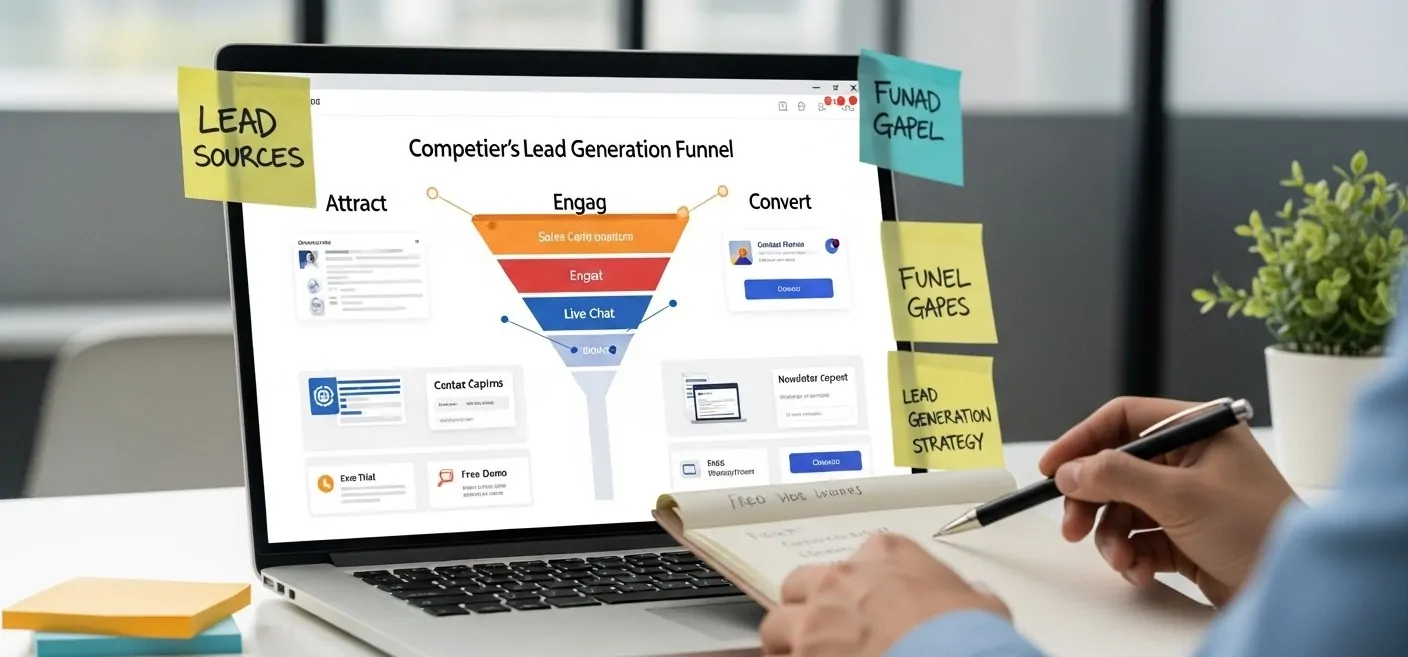
A successful B2B digital marketing strategy is built around one core goal: converting prospects into qualified leads. By mapping your competitors’ lead generation funnels, you can uncover how they attract, engage, and convert potential customers and identify opportunities to improve your funnel.
How to Analyse Their Funnel:
How Do They Collect Leads?
Explore the various entry points they offer for lead capture:
- Contact forms
- Chatbots or live chat
- Newsletter signups
- Free demos or consultations
- Free trials or gated content (e.g., eBooks, whitepapers)
Ask yourself: Are these offers compelling enough to exchange contact info?
Are There Clear Buyer Journey Stages?
Identify whether the funnel supports each stage of the B2B buyer journey:
- Top of Funnel (TOFU): Blogs, webinars, infographics, awareness content
- Middle of Funnel (MOFU): Case studies, product comparisons, email sequences
- Bottom of Funnel (BOFU): Free trials, sales consultations, live demos
The presence of content and CTAs for each stage shows how mature their funnel is.
Test the Experience Firsthand
- Sign up for a lead magnet, fill out a contact form, or request a demo.
- Track how quickly they respond and what kind of follow-up happens.
- Are you added to an email nurture sequence or contacted by a sales rep?
- Is the experience smooth, personalised, and aligned with their messaging?
Tools You Can Use:
- BuiltWith – To see if they’re using tools like HubSpot, Salesforce, Intercom
- Hotjar (on your site) – To record how your funnel compares with theirs
- Leadfeeder or Clearbit (optional) – To identify lead sources if you’re running comparisons.
Identify Gaps and Opportunities

After thoroughly analysing your competitors across digital channels, it’s time to turn insights into actionable advantages. The real value of competitive analysis lies in pinpointing what your competitors are doing well or aren’t doing at all and using that information to craft a stronger, smarter strategy.
Questions to Ask:
Where Are They Falling Short?
- Poor SEO: Are they missing out on key keywords or lacking backlinks?
- Outdated Website Design: Is their site slow, cluttered, or not mobile-friendly?
- Low Engagement: Are their social posts or email campaigns generating little interaction?
- Weak Content Strategy: Is their blog inactive or lacking depth and variety?
What Channels Are They Not Using?
- Do they ignore platforms like YouTube, LinkedIn, or paid ads?
- Are they missing out on email automation or remarketing strategies?
- Are they neglecting lead magnets or retargeting?
What Can You Do Better or Differently?
- Can you create higher-quality, more actionable content?
- Can you respond faster to leads or offer a smoother funnel experience?
- Can you build a stronger personal brand through thought leadership (e.g., CEO on LinkedIn)?
Can you provide better social proof (case studies, reviews, testimonials)?
Create a Comparison Sheet
Now that you’ve gathered a wide range of data across channels, it’s time to organise everything into a clear, visual format. A well-structured comparison sheet helps you spot trends, compare performance, and prioritise actions across your competitors.
Whether you use Excel, Google Sheets, or Notion, the goal is to centralise your competitive intelligence in an easy-to-update, analyse, and share format with your team.
How to Structure Your Sheet:
Create a horizontal table, with each competitor in a separate column and evaluation areas as rows.
| Category | You | Competitor 1 | Competitor 2 | Competitor 3 |
| Website Quality | Good UX, fast loading | Outdated design | Clean but slow | Excellent UI |
| SEO | 45 DA, missing some keywords | 60 DA, strong backlinks | 50 DA, low content volume | 70 DA, aggressive keyword targeting |
| Content | Weekly blogs + case studies | No blog, limited pages | Good variety | Strong video content |
| Ads | Google Search Ads | None | LinkedIn Ads | Full-funnel Google + YouTube Ads |
| Social | LinkedIn + X, 3 posts/week | Inactive | Strong LinkedIn presence | LinkedIn, YouTube, active |
| Automated drips + newsletter | Only contact form | Weekly newsletters | Gated assets + nurture series | |
| Positioning | ROI-focused, SaaS experts | Price-focused | Innovation-focused | “Security-first” positioning |
Tools You Can Use:
- Google Sheets: Great for collaboration and cloud access.
- Notion: Ideal for linking research, screenshots, and comments in one place.
- Airtable: Useful if you want a more interactive or filtered view.
Use the Insights to Improve Your B2B Strategy
Collecting competitive data is only half the battle—what truly matters is what you do with it. The goal of a competitive analysis isn’t just to monitor others, but to refine and elevate your digital marketing strategy using clear, data-backed insights.
Here’s how to turn analysis into action:
Update Your Buyer Personas
- Based on how competitors speak to their audience, identify new pain points, objections, or goals your personas may have.
- Adjust messaging to align more closely with the language and tone your target audience responds to.
Refine Your Content Calendar & Keyword Strategy
- Fill content gaps your competitors missed.
- Target underused but high-intent keywords they’re ignoring.
- Introduce new content formats like comparison guides, industry reports, or customer success stories.
Optimise Ad Targeting & Messaging
- Use competitor PPC insights to improve your ad copy, keywords, and offers.
- Craft more compelling CTAs or positioning angles that highlight what sets you apart.
Create Better Lead Magnets & Nurture Flows
- Design higher-value lead magnets (eBooks, calculators, demos) that outperform generic ones.
- Build or improve email nurture sequences to educate, qualify, and convert leads more effectively.
- Use automation tools to personalise content based on user behaviour or funnel stage.
Conclusion
Conducting a thorough competitive analysis in B2B digital marketing isn’t just about keeping tabs on your rivals—it’s about uncovering smarter strategies to elevate your brand. By analysing competitors’ websites, SEO, content, ads, social presence, and lead funnels, you gain actionable insights that help you refine your messaging, optimise campaigns, and deliver more value to your target audience. With a data-driven understanding of the landscape, you can confidently craft a digital marketing strategy that keeps you competitive and helps you lead.