What is SEO Content Writing, Really?
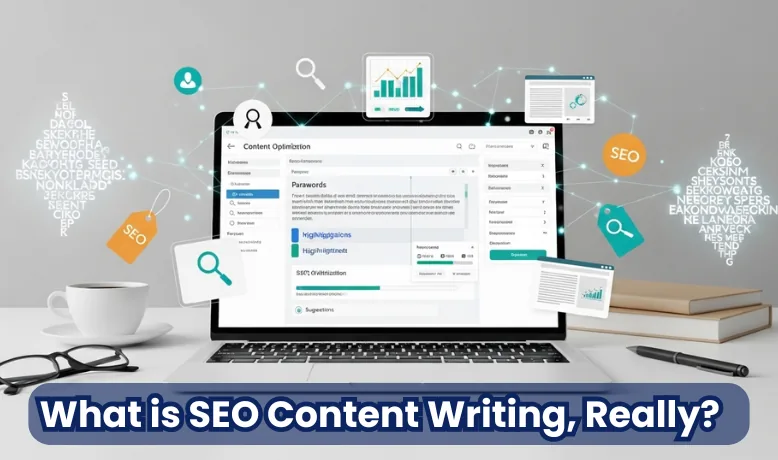
If you run a business in Pakistan, you’ve probably heard this advice a thousand times: “You need to be on Google.” And right after that, “You need SEO and content.”
Key takeaways
- SEO content writing is creating useful content that answers real customer questions, guided by keyword research.
- Keyword stuffing no longer works; Google understands intent and rewards pages that answer the query well.
- It combines research (keywords, competitors, structure) with clear, persuasive writing for people.
- A good brief, a simple writing process and careful editing matter more than any single keyword trick.
- AI Overviews and AI Mode now answer many questions directly, so direct answers, dated facts and original input are what get a page cited.
For many, this advice brings to mind a specific, outdated image: a page stuffed with keywords, reading like a broken record.
- “We are the best digital agency in Lahore.”
- “For a digital agency in Lahore, call our Lahore digital agency.”
- “Our digital agency services in Lahore are the best.”
This is what many people think SEO content writing is. And a decade ago, they might have been (partially) right.
But today? That’s not SEO. That’s spam. And it will destroy your rankings faster than you can say “Google penalty.”
So, what is SEO content writing, really?
It’s time to clear up the confusion. Real SEO content writing is no longer a clumsy trick. It’s a sophisticated craft that, when done right, is the most powerful engine for your business growth.
The Old Way vs. The Real Way
First, let’s get the old, failed method out of the way.
The “Old SEO” Trap: This was the practice of writing for robots. Search engines like Google used to be simple. They scanned a page for keywords to figure out what it was about. The more times you used a keyword, the more “relevant” your page seemed. The result was unreadable, untrustworthy content that no real human would ever want to read.
Modern SEO Content Writing: This is the practice of writing for humans, first.
Google’s algorithm is now incredibly intelligent. It no longer just counts keywords. It understands intent. It knows why a person is searching, what their question really is, and what a high-quality answer looks like.
Today, SEO content writing is the art of creating high-quality, valuable, and engaging content that perfectly answers your audience’s questions, while naturally including relevant keywords as a guide.
It’s Not About Keywords; It’s About Answering Questions
This is the most important shift you need to understand.
- Old SEO: “How can I rank for ‘best web developer’?”
- Modern SEO: “What questions do people ask before they hire a web developer?”
Those questions might be:
- “How much does a website cost in Pakistan?”
- “WordPress vs. custom website: which is better?”
- “5 signs I need a new website”
- “What is a ‘mobile-friendly’ site and why do I need one?”
SEO content writing means you write blog posts that answer those specific questions. When you do, two magic things happen:
- You Build Trust (for Humans): A potential customer who finds your article “WordPress vs. Custom: Which is Best?” sees you as a helpful expert, not just a pushy salesperson. You’ve helped them. They trust you. Who will they call when they’re ready to buy? You.
- You Build Authority (for Google): Google sees your page answering this question well, and other sites and readers start to reference and link to it. Over time it treats you as an “authority” on web development. As a result, it ranks you higher, not just for that one blog post, but for your main service pages, too.
This is the secret. It’s more than keywords; it’s about why quality content is king for building trust with both your customers and the search engines.
So, Where Does the “SEO” Part Come In?
If it’s all about writing good articles, why call it “SEO” content?
Because it’s not just writing. It’s a two-part strategy:
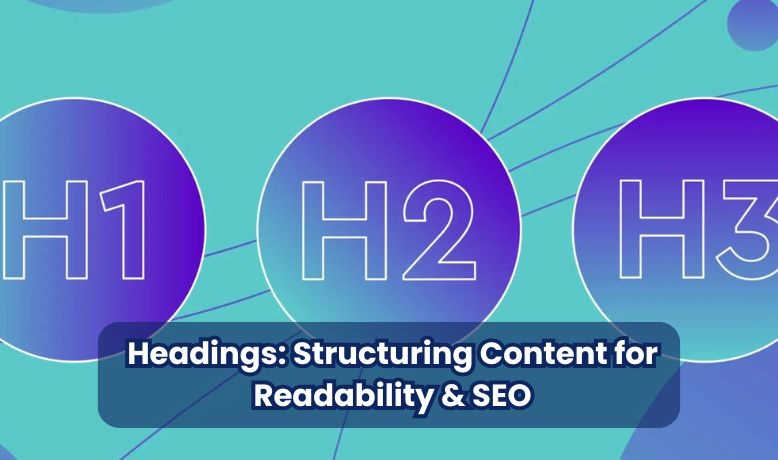
- The “SEO” (The Science): This is the foundation. It involves keyword research to discover the exact questions your customers are asking and what words they use. It involves competitor analysis to see what your rivals are doing. It involves structuring the content with proper headings (H1, H2) so Google can understand it easily.
- The “Content” (The Art): This is the building itself. It’s the craft of writing a compelling, clear, and persuasive article that answers the user’s question, holds their attention, and guides them to the next step.
You cannot have one without the other. Amazing writing with no SEO research will never be found. A page full of SEO research with bad writing will never build trust or make a sale.
This is where a professional comes in. It’s their job to do this research and write pages that both users and Google find useful. A skilled SEO content writer does more than write articles. They build the foundation your pages need to rank.
Content Needs a Great Home
There’s one final piece to this puzzle. What happens if you have the best article in the world on a website that’s slow, broken, or impossible to read on a phone?
It fails.
SEO content is the “what” (the value), but your website is the “how” (the experience). Google knows this. Core Web Vitals (LCP, INP and CLS), HTTPS and mobile usability are among the many signals Google looks at; there is no single “Page Experience” ranking system, but a slow or broken site still loses readers and the rankings that come with them.
Great content needs a great site. Site user experience is the other half of the SEO battle. Your content needs a fast, secure, and mobile-friendly home, which is the job of good web development.
It’s Not Magic, It’s a Strategy
So, what is SEO content writing, really?
It’s not a trick or a loophole. It is the simple, sustainable, and most powerful strategy for long-term business growth.
It is the practice of systematically answering your customers’ questions so thoroughly and so helpfully that Google has every reason to show you near the top of the results. It’s about building trust, demonstrating your expertise, and turning readers into customers.
Stop stuffing keywords. Start answering questions.
What a Good SEO Content Brief Includes
Most weak content starts with a weak brief. Whether you write yourself or hire a writer, prepare a one-page brief before any writing starts.
- Main keyword and intent: for example, "website cost in Pakistan", where the reader wants a price range and what affects it.
- Related questions: taken from Google's People Also Ask box, autocomplete and questions your sales team hears.
- Target reader: who they are, what they already know and what worries them.
- What ranks now: the type of pages in the top results (guides, lists, service pages), whether an AI Overview appears, and what they miss.
- Your unique input: real examples, projects, photos, data or opinions only your business can give.
- Outline: a working H1 and H2 structure.
- Internal links: which service pages and related posts to link to.
- Call to action: the one next step you want the reader to take.
What the opening paragraph should look like. For the keyword above, an answer-first opening reads something like this: "As of 2026, a basic five-page business website in Lahore usually costs between PKR 30,000 and PKR 120,000 depending on the design and features, plus roughly PKR 10,000 to 20,000 a year for a domain and hosting. Custom and e-commerce sites cost more. Here is what changes the price." The reader gets the figure in the first two sentences, and the rest of the page explains it. Use your own real prices, and date them.
How to Write an SEO Blog Post: A Simple Process
- Answer first: give the direct answer in the first few lines. Readers and Google both value getting to the point.
- Follow the outline: one idea per section, with descriptive subheadings that could stand alone in a list.
- Write plainly: short sentences, everyday words and examples your local audience recognises, such as prices in rupees or cities they know.
- Use keywords naturally: include the main phrase in the title, the opening and at least one subheading, then write normally. Related terms will appear on their own if you cover the topic properly.
- Add proof: screenshots, steps you actually followed, before-and-after examples or quotes from your team.
- Write the title and meta description: make them accurate and specific so people want to click.
- Edit hard: cut filler, check facts and read it aloud. If a sentence adds nothing, delete it.
- Update later: check the post in Google Search Console after a few months and improve sections that are not meeting searcher needs.
Writing for AI Overviews and AI Mode
Google now answers many searches itself. AI Overviews appear above the results for a large share of informational queries, and AI Mode (available in Pakistan) gives a full conversational answer with a short list of cited pages. Both are built from pages Google has indexed, so the same writing habits that earn rankings also earn citations.
- Direct answers under question headings: an H2 or H3 phrased as the question, followed by a two- or three-sentence answer, is the easiest thing for an AI system to lift and cite.
- Facts with dates and sources: "as of 2026" prices, named sources and specific numbers are quoted more often than vague claims.
- Original data and experience: your own survey, project results or photos are things no other page can offer, so they get cited rather than summarised away.
- Clear structure: short paragraphs, lists and tables that read correctly out of context.
Be realistic about clicks. When a simple question is answered in the AI Overview, fewer people visit any website. Put your best effort into commercial pages, comparisons, local pages and anything where the reader still needs to talk to a business before deciding, and track the pages that still bring visits in Google Search Console.
SEO Content Writing and AI Tools
AI writing tools are now part of many content workflows. Used well, they speed up research, outlines and first drafts. Used badly, they produce generic pages that look like everything else on the web.
Google's position is that it rewards helpful content however it is produced, but mass-producing pages mainly to rank breaks its scaled content abuse policy. Since the March 2024 core update there is no separate "helpful content update": the helpful content system was folded into Google's core ranking systems, and the same update introduced the scaled content abuse and site reputation abuse spam policies. In practice:
- Use AI for brainstorming questions, summarising research and suggesting outlines.
- Add the parts AI cannot know: your prices, processes, customer stories and local experience.
- Fact-check every claim, figure and date an AI tool produces.
- Edit for your brand's voice so the page sounds like a real business, not a template.
Frequently asked questions
What does an SEO content writer do?
An SEO content writer researches what your customers search for, studies the pages that already rank, and plans content that answers those questions better. They then write clear, well-structured pages or blog posts, add relevant keywords naturally, write titles and meta descriptions, and suggest internal links. Good SEO writers also update older content when results or facts change.
How many keywords should an SEO article target?
Usually one main keyword plus a handful of closely related phrases and questions that share the same intent. For example, a post on website costs can cover price ranges, what affects the cost and ongoing fees in one article. Trying to target unrelated keywords on one page confuses readers and search engines, so give separate topics their own pages.
Is SEO content writing different from copywriting?
They overlap but have different goals. SEO content writing aims to be found and to inform, so it starts from search research and usually produces articles and guides. Copywriting aims to persuade someone to act, such as on a sales or landing page. The best service pages and blog posts combine both: findable, helpful and persuasive.
How long should an SEO blog post be?
As long as it takes to answer the question fully, and no longer. Google has no preferred word count. A quick definition might need a few hundred words; a complete buying guide may need a few thousand. Check the pages already ranking for your keyword to see how deep they go, then aim to be more useful, not simply longer.
Does SEO content still matter now that Google shows AI Overviews?
Yes, but the goal has widened. AI Overviews and AI Mode build their answers from pages Google has indexed and cite some of them, so clear, factual, well-structured content is still what gets you shown. Simple informational queries now send fewer clicks, so put more effort into commercial, comparison and local pages where readers still visit the site before they buy.