How Do Local SEO Agencies Use Rapid URL Indexer
Local SEO is about helping businesses rank better in local search results to attract nearby customers. One key factor in SEO success is how fast search engines like Google can find and index your website’s pages. Faster indexing means quicker visibility in search results, which can make a big difference for businesses. This is where tools like Rapid URL Indexer are useful, helping businesses get their new content indexed faster to stay competitive. In this blog, we’ll explore how Local SEO agencies use tools like Rapid URL Indexer to speed up the indexing process. We’ll also discuss the tool’s role in improving search rankings.
Key takeaways
- Local SEO agencies use Rapid URL Indexer to get new location pages, citations and local backlinks discovered sooner, mainly because Search Console only allows a small number of manual indexing requests a day and cannot submit other sites' pages.
- It is a paid, third-party service, not a Google-approved route: Google's official methods are Search Console, sitemaps and the Indexing API (job postings and live events only), and Google says it does not index pages faster because a tool asked.
- Indexing is a prerequisite for ranking, not a ranking factor; it cannot force Google to index a thin page, and it has no direct effect on Google Business Profile or map pack rankings.
- Submit only useful URLs, and check results in Google Search Console rather than trusting submission reports.
What is Rapid URL Indexer?
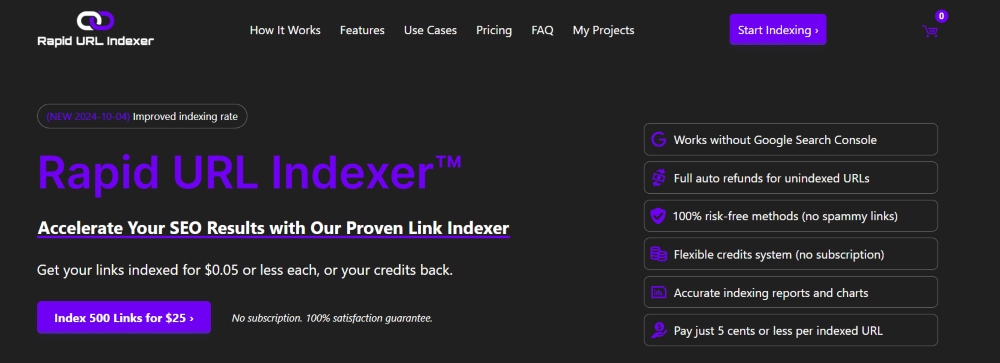
Rapid URL Indexer is a paid, third-party tool that helps websites get new or updated pages crawled, and usually indexed, by Google sooner. Its purpose is to shorten the wait between publishing a page or earning a link and Google knowing about it. It sits beside Google Search Console in an agency’s toolkit rather than replacing it: Search Console is the official route for your own site but limits manual requests to a handful a day and cannot submit other sites’ pages, which is where a bulk indexer comes in. How it works and what it costs is covered further down.
Why is URL Indexing Crucial for Local SEO?
Faster Search Engine Visibility
URL indexing helps your website’s pages appear in search results quickly after publication or updating. This is crucial because the faster your content is visible, the sooner potential customers can find your business. For local businesses, getting indexed quickly can make a significant difference in connecting with nearby customers at the right moment.
Gets Pages Into the Running Sooner
A page cannot rank until it is indexed, so quick indexing lets a new page start competing in local search results sooner. Indexing itself is not a ranking factor; once a page is in the index, its position depends on relevance, content quality, links and the usual signals.
Helps in Staying Ahead of Competitors
Faster indexing gives you a competitive advantage by allowing your content to appear in search results before your competitor’s pages. This means you can capture potential customers searching for similar services or products in your area, helping you stay ahead in the local market.
How Local SEO Agencies Utilize Rapid URL Indexer
Optimizing Newly Created or Updated URLs
Local SEO agencies use Rapid URL Indexer to ensure that search engines quickly index every new or updated URL. When a business adds fresh content, such as blog posts, product pages, or service updates, this content must become visible to search engines as soon as possible. Rapid URL Indexer lets agencies submit these URLs in bulk, which usually gets them crawled sooner than waiting for Google to find them. It does not guarantee indexing; pages Google judges thin or duplicate stay out whatever tool submitted them.
Getting Local Business Pages Indexed Quickly
Getting indexed fast for local businesses is critical for appearing in search results when potential customers are looking for nearby services. SEO agencies use Rapid URL Indexer to accelerate the indexing of important business pages such as location pages, contact pages, and service-area pages. By using this tool, agencies can get local business pages discovered sooner, so they start competing earlier; ranking well still depends on the page and the business’s overall local signals. This tool is especially useful for local campaigns where time is a factor in gaining a competitive edge.
Best Practices for Rapid URL Indexing in Local SEO
Prioritizing High-Quality Content URLs
Always prioritize submitting URLs with valuable and relevant content. Pages that provide useful information, such as service details or location-specific content, have a higher chance of ranking well in local searches once indexed.
Combining Rapid URL Indexer with Other Tools
For best results, use Rapid URL Indexer alongside tools like Google Search Console. Request indexing for key pages in Search Console, use the indexer for bulk URLs and external links, and check results in Search Console.
Avoiding Black-Hat SEO Techniques
Stay away from black-hat SEO methods like over-indexing irrelevant or low-quality pages. This can harm your site’s reputation with search engines, leading to penalties or de-indexing. Always follow ethical practices for sustainable SEO success.
Common Mistakes to Avoid

- Over-reliance on Rapid Indexing Tools: Relying solely on tools like Rapid URL Indexer without focusing on quality content can lead to poor long-term results.
- Ignoring Organic Ranking Factors: Fast indexing helps, but organic ranking factors like backlinks, keyword optimization, and user engagement are still critical for success.
- Not Using Google-Approved Methods: Google’s only official routes are Search Console, sitemaps and the Indexing API (for job postings and live events only). A third-party indexer is a grey-area supplement for discovery; keep the official routes as your primary method and never use the Indexing API for ordinary pages.
- Submitting Low-Quality URLs: Submitting irrelevant or thin content pages for rapid indexing can harm your website’s ranking.
- Neglecting to Monitor Results: Failing to track indexed URLs and their performance can prevent necessary adjustments for ongoing SEO improvements.
Local SEO Basics to Pair With Rapid Indexing
Faster indexing only helps if the pages are worth ranking. Get these local SEO basics right first:
- Focus on Localized Content
- Optimize Google Business Profile (GBP)
- Leverage Local Keywords
- Create Location-Specific Landing Pages
- Optimize for Mobile Users
- Use Local Listings and Directories
- Engage with the Local Community
These steps help people nearby find your business in local search. Get them in place before you spend credits on indexing.
How Rapid URL Indexer Works and What It Costs
Rapid URL Indexer is a paid web service. You paste a list of URLs, the service uses its own methods to prompt Google to crawl them, and it reports which ones were indexed. It does not use any official Google submission API, and it cannot submit pages to Bing or other engines on your behalf.
- Credits. You buy credits in packs and spend one credit per URL. As of October 2026 the vendor's packs work out at a few US cents per URL (around $0.05, or roughly PKR 14, on the mid-size packs); check the current pricing page before buying, as packs and rates change.
- Refund if not indexed. The vendor states that URLs still unindexed after 14 days are refunded to your credit balance automatically. This is the main reason agencies prefer it to indexers that charge regardless of outcome.
- Reports. The dashboard shows an indexed or not-indexed status per URL. Verify important URLs yourself with the URL Inspection tool in Search Console (for your own site) or a quoted Google search (for external pages).
Why agencies look beyond Search Console
- Search Console's URL Inspection tool allows only a small number of manual "Request indexing" submissions per property per day (roughly ten), which is too few for a batch of new citations.
- Search Console only accepts URLs on properties you own, so citations, directory profiles and guest posts on other sites cannot be submitted there at all.
- Sitemaps remain the official bulk method for your own site and should be kept accurate regardless of any indexer.
Google's position. Google's official submission routes are Search Console (URL Inspection and sitemaps) and the Indexing API, which may be used only for JobPosting and BroadcastEvent pages. Google representatives have said repeatedly that third-party indexing services are unnecessary and do not influence whether a page is indexed; a page is indexed when Google judges it worth indexing. In practice, agencies use these tools to speed up discovery of pages that would be indexed anyway, and results vary from batch to batch.
Which Local SEO URLs Are Worth Submitting
Not every URL deserves a credit. Agencies get the best results when they submit a short list of pages that can actually influence local visibility:
- New location or service-area pages on the client's site, once they have unique content, a map, contact details and internal links.
- New citations on business directories, industry listings and chamber of commerce sites, especially deep profile pages that Google may be slow to crawl.
- Local backlinks and mentions, such as a guest post on a Lahore business blog or a feature on a local news site.
- Updated core service pages after a major rewrite, new pricing information or new service areas.
Skip these: the Google Business Profile itself, thin city pages that only change the town name, tag and archive pages, and any page with a noindex tag. Submitting them wastes credits and, for doorway-style pages, will not change Google's decision to leave them out.
What Rapid Indexing Cannot Do for the Map Pack
Google says local results are based mainly on three things: relevance (how well a profile matches the search), distance (how far the business is from the searcher or the location in the query) and prominence (how well known the business is, including reviews, links and mentions). Indexing speed is not on that list.
This means an indexing tool can help the website and citation side of local SEO, but it will not move a business into the map pack on its own. For most small businesses in Pakistan, these usually matter more:
- A complete Google Business Profile with the right primary category and accurate hours.
- The same business name, address and phone number everywhere it appears online.
- Genuine reviews, with replies from the owner.
- A website page for each location that matches the profile details.
A Weekly Indexing Routine for a Local Client
- List every new URL from the past week: site pages, citations and local links.
- Check each one in Search Console (for the client's site) or with a quoted Google search (for external pages).
- Submit only the unindexed, useful URLs to the indexing tool.
- Recheck them the following week and note which were indexed; results vary by batch, so keep a simple log of indexed versus submitted counts to judge whether the credits are worth it.
- For URLs still missing after two checks, look for the cause, such as thin content or a noindex tag, instead of resubmitting.
Conclusion
Rapid indexing helps new or updated pages become visible to potential customers sooner. That gives pages a chance to rank earlier, which can bring traffic and enquiries sooner for local businesses. For SEO agencies, tools like Rapid URL Indexer speed up this step. They work best alongside quality content and ethical SEO practices.
Frequently asked questions
Do local citations need to be indexed to count?
A citation on a page Google has never indexed is unlikely to help, because Google may not know it exists. Many directory listings are indexed naturally over time. Agencies submit new citations and local backlinks to an indexing tool so Google can find them sooner. Consistent name, address and phone details still matter more than indexing speed.
Can I submit my Google Business Profile to an indexing tool?
There is no need. Your Google Business Profile lives on Google's own systems, so it does not need to be discovered like a web page. Improve it directly instead: correct categories, full business details, photos, regular posts and a steady flow of genuine reviews. Indexing tools are for web pages and links, not for the profile.
How many location pages should a local business create?
Create one for each real location or service area where you can say something specific: address, team, services offered there, local projects or reviews. Avoid near-identical pages that only swap the city name. Google treats these as doorway pages, and they are often left out of the index however many times you submit them.
Is using Rapid URL Indexer against Google's guidelines?
Google has not named indexing services in its spam policies, but it has said they are unnecessary and do not change its indexing decisions, and its Indexing API may only be used for job postings and livestream pages. Treat a third-party indexer as a grey-area supplement for discovery of citations and links, keep Search Console and sitemaps as the primary route for your own site, and never submit thin or doorway pages hoping to force them in.
Why does Google say 'Crawled, currently not indexed' even after I submit a page?
Because that status is a quality decision, not a discovery problem. Google has crawled the page and chosen not to index it for now, usually because it is thin, duplicates other pages or the site as a whole has many low-value URLs. Resubmitting through any tool will not change that. Improve the page, add internal links from pages Google already values, and remove or consolidate weak pages across the site.