Navigating International SEO: Effective Redirect Strategies for Global Audiences

International SEO is about making your website friendly and easy to find for people worldwide. It’s important because it helps your site appear in search results in different countries and languages, making it easier for more people to find, understand, and use your site. This way, whether someone is from France, Japan, or Brazil, they can discover your website and get information in a way that makes sense to them, helping your business reach more people all over the globe.
Key takeaways
- For international SEO, use hreflang tags to show the right language version in search, not forced redirects.
- Avoid automatic redirects based on IP or browser language; suggest the local version with a banner instead.
- Pick one URL structure per market: ccTLDs, subdomains or subfolders, and use it consistently.
- Research keywords separately for each market and localise content, not just translate it.
- Follow local privacy laws such as GDPR where you collect visitor data.
Understanding Your Global Audience

It’s crucial to understand why cultural differences, the way people search for things, and the languages they speak matter a lot when looking at different markets worldwide (according to insights from Semrush and Ahrefs). Also, it’s about finding ways to figure out who your international audience is, using tools to see what languages they use and where they are from. This helps ensure your website speaks their language, literally and culturally.
Strategic Use of Redirects and hreflang Tags
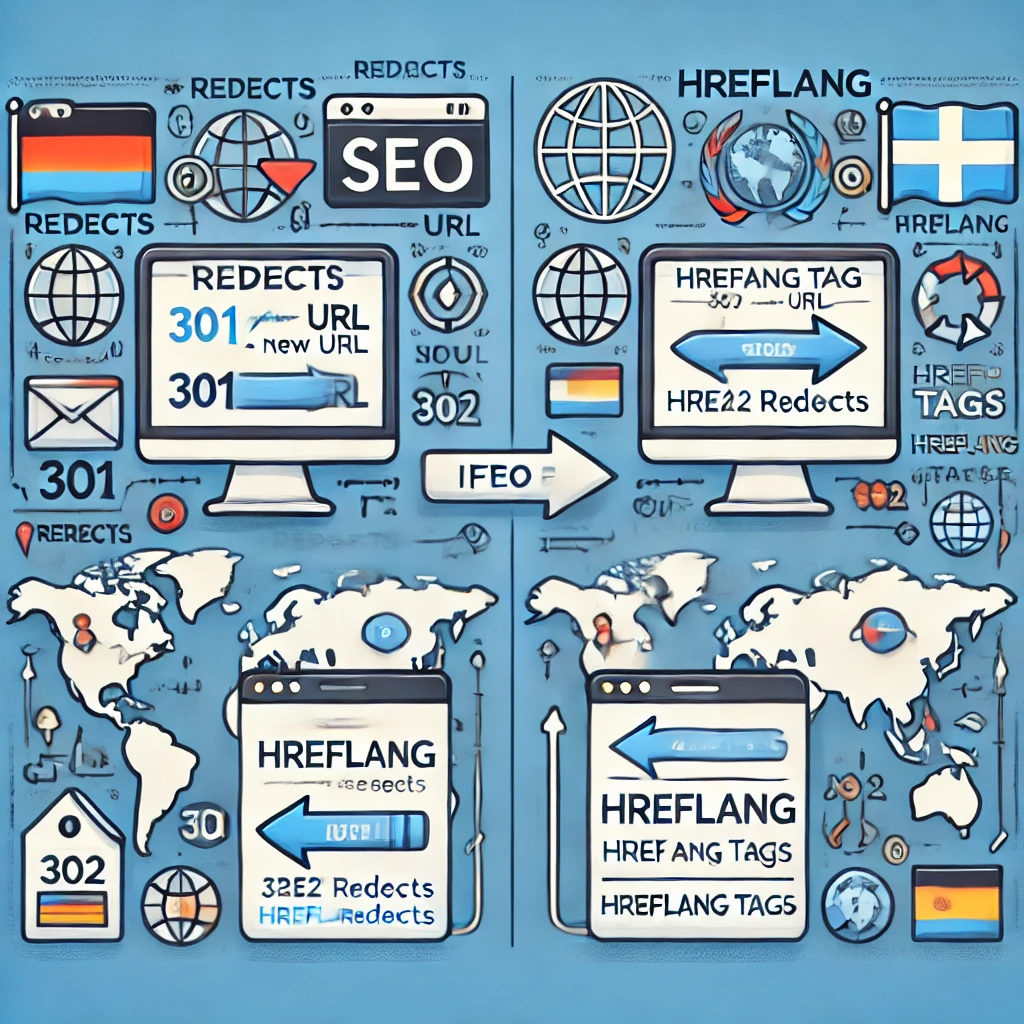
Using redirects and hreflang tags correctly can make your website more friendly to people worldwide. Let’s simplify this.
What Are Redirects and hreflang Tags?
- Redirects are like signs on the internet highway that take you to the right place. If someone tries to visit a page on your website but there’s a better version for their location or language, a redirect will guide them there automatically.
- Hreflang Tags are special codes that tell search engines like Google which language or country your content is meant for. It’s like labeling each page of your website so search engines know who might find it most useful.
How They Help
- Direct Users Correctly: Imagine someone in France finds your website, but it’s in English. If you have a French version, redirects and hreflang tags help ensure they see the French version, making it easier for them to understand and use your site.
- Improve SEO and User Experience: These tools also help search engines show the right version of your content to the right people, which can help your site appear higher in search results. A better ranking means more people can find you, and getting the right language version improves their experience on your site.
Best Practices for Using hreflang Tags
- Use Them for Language and Regional Targeting: Make sure you know which language and country each page is intended for. This helps your content reach the people it’s designed for, whether in the US, Canada, France, Spain, or any other country.
- Keep Your Tags Accurate and Up-to-Date: Regularly check your hreflang tags to ensure they’re correct. If you add new languages or change your site’s structure, update your tags to match. This keeps everything running smoothly and ensures search engines can properly understand and use your tags.
Geo-Targeting Techniques

- Use different URL structures to target specific countries or languages. This helps search engines and users know which version of your site is meant for them.
- Country code top-level domains (ccTLDs) like .uk for the United Kingdom or .jp for Japan directly show which country your site targets. They’re great for local businesses or services.
- For French speakers, subdomains, like fr.yoursite.com, can be used for language or country targeting. They’re easier to set up and manage under your main domain.
- Subdirectories (or subfolders) like yoursite.com/fr/ for French also work for organising different language versions on your site. They’re simple and keep everything under one main site.
Why It’s Important
- Specific targeting: Clearly defining your target country or region with your URL structure helps your site appear in search results for users in those areas.
- ccTLDs, gTLDs, and Subdomains: Choosing the right kind of domain (like ccTLDs for specific countries or generic top-level domains (gTLDs) for a broader audience) plays a big role in your international SEO strategy. It tells search engines and users who your content is for, improving your visibility and relevance in different markets.
Keyword Research for Global Markets

When going global, it’s super important to find out what words people use when searching online in different parts of the world. This is because people in one country might use different words or phrases to find the same thing as people in another country. Plus, some words don’t translate directly from one language to another and might mean something different in another culture.
This is where “transcreating” keywords comes in. It means translating words and changing them to fit what people in that place are searching for. For example, a “cell phone” in the US might be searched for as a “mobile phone” in the UK. Doing this kind of research can be tricky with languages you don’t speak. Still, it’s important because it helps you connect with people in their language and according to what’s popular or important in their country.
Content Localization and Cultural Sensitivity
Content Localization

When you make your website or write content for people worldwide, ensuring it fits what they’re used to is important. This means changing your website, and what you write to match the language they speak and the cultural stuff they know about. This process is called “content localisation.” It’s not just about translating words into another language; it’s about making sure everything makes sense in their culture, like jokes, references, or even how you show dates and times.
Cultural Sensitivity
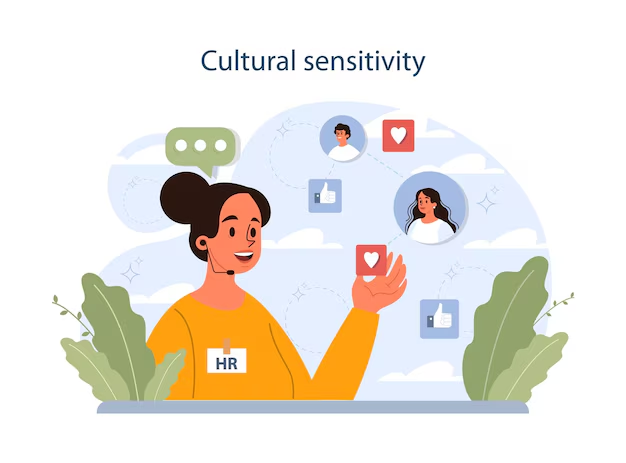
Cultural sensitivity is a big deal, too. You want to avoid saying or showing things that might upset or offend people from another culture. This isn’t just about being nice; it’s smart, too. When people feel understood and respected, they’re more likely to enjoy your content and return for more. Paying attention to these details can help your website connect better with folks worldwide, making them feel welcome and valued.
Technical SEO for International Websites
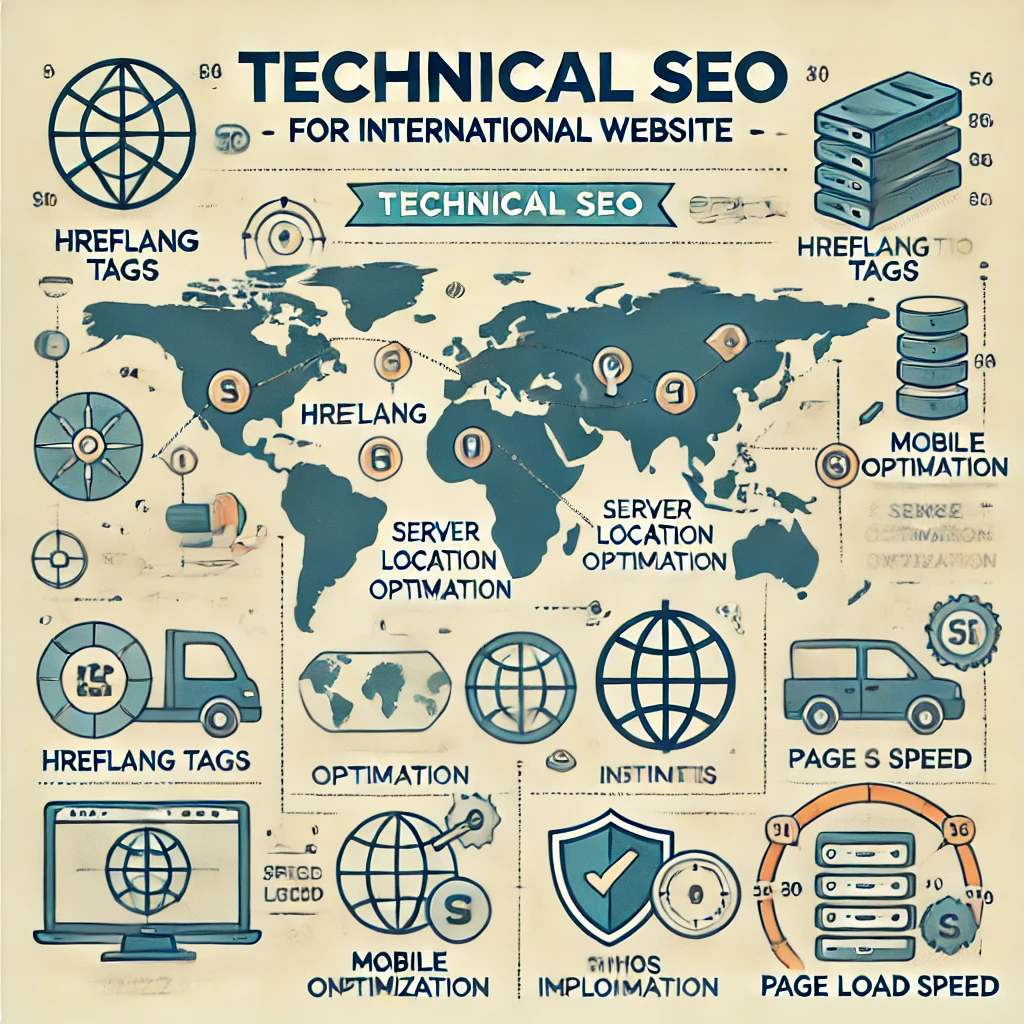
- Choosing the Right Structure for Your Site: Your website can be organized differently to target various countries or languages. You could have separate versions for each country or language or one big site that includes sections for each place.
- Using hreflang Tags: These are special codes you put on your website to tell search engines like Google which language or country your pages are meant for. This helps ensure people see your site’s right version in their search results.
- Other Technical Tweaks: There are more ways to optimize your site for people from different places. This might include ensuring your site loads quickly worldwide or that it’s easy for search engines in different countries to understand your site.
Link Building and Social Media Outreach

Link building and using social media to reach people are important to making your website more visible worldwide, especially when working with different languages. Building multilingual links means getting other websites from various parts of the world to link to your site. This is key because search engines see these links as a sign that your site is valuable, which can help your site show up better in search results.
Also, working with influencers and connecting with communities on popular social media platforms in your target countries can help spread the word about your site. Each country might use different social media platforms more than others, so knowing where to focus your efforts is crucial. By engaging with people where they spend their time online, you can attract more visitors to your site worldwide.
Privacy and Compliance in Global SEO
When you make your website available to people worldwide, it’s really important to follow the privacy rules of different places. For example, Europe has a law called GDPR that protects people’s personal information, and the U.S. has its own rules like the CCPA in California. These laws affect how you collect and use information from your website visitors, and you need to follow them to avoid fines and keep your visitors’ trust. Privacy compliance is not a direct ranking factor, but heavy consent tools and tracking scripts can slow your pages, so set them up carefully. So, understanding and complying with these privacy laws is a big part of ensuring your website can be found by people no matter where they are in the world.
Should You Redirect Visitors Automatically by Location?
Many international sites redirect people based on their IP address or browser language. It feels helpful, but it often hurts both users and SEO. Google recommends against automatic redirects for language or country versions.
Why forced redirects cause problems
- Googlebot may never see your other versions. It mostly crawls from the United States, so it keeps landing on one version.
- Travellers and expats get the wrong page. A Pakistani visitor browsing from Dubai may want Pakistani prices, not UAE ones.
- Shared links break. Someone sends a link to a friend abroad, and the friend is pushed to a different page.
What to do instead
- Add hreflang tags so Google shows the right version in search results.
- Show a small banner such as "You seem to be in the UAE. View our UAE site?" and let people choose.
- Remember their choice in a cookie so they are not asked on every page.
- Add a visible language or country switcher in the header or footer.
- If you must redirect, send users to a local version only from a neutral x-default page, never from a specific country page, and treat Googlebot exactly like any other visitor from the same location.
Save server-side 301 redirects for real URL changes, such as moving a market from a subdomain to a subfolder.
Conclusion
In wrapping up, it’s crucial to remember that making your website work for people worldwide involves understanding and applying international SEO, like using redirects correctly and ensuring your site speaks the right language to the right people. The world of SEO is always changing, with new trends and rules constantly popping up. Staying up-to-date with these changes and knowing the best ways to reach people in different countries is key to ensuring your website can be found and enjoyed by as many people as possible. So, keep learning and adjusting your strategies to keep up with the ever-evolving digital landscape.
Frequently asked questions
Is a ccTLD better than a subfolder for international SEO?
Neither is always better. A ccTLD like .ae sends the strongest country signal and builds local trust, but each domain must earn its own authority and costs more to run. Subfolders like example.com/ae/ share the main domain's authority and are easiest to manage, which suits most small and mid-sized businesses. Subdomains sit in between and are mainly useful when a separate team or platform runs each market.
Does Googlebot see my other country versions if I redirect by IP?
Often it does not. Googlebot mostly crawls from US IP addresses, so an IP-based redirect can send it to your US or default version every time. Your other country pages may then be crawled rarely or not at all. Keep every version reachable through normal links, add hreflang tags, and let users choose their version instead of forcing them.
What is x-default in hreflang?
x-default is an hreflang value that marks the page to show when no other language or country version matches the user. It is usually a global homepage or a language selector page. For example, a site with Pakistan and UAE versions might set its international English page as x-default, so visitors from other countries land there rather than on a market-specific page.
Can I target Pakistan and the UAE from one website?
Yes. The common setup is one domain with subfolders, such as /pk/ and /ae/, each with its own prices, contact details and currency. Link the versions with hreflang tags, for example en-pk and en-ae, and write separate content where searches differ. Avoid copying the same page into both folders with only the city name changed, because that adds little value for either audience.